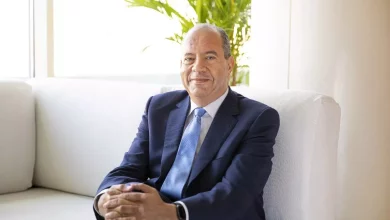
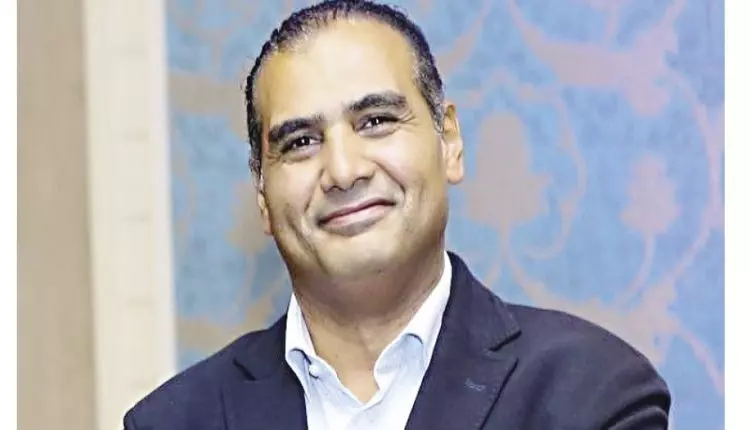
Khaled Fawzy, General Manager of Fortinet Egypt, Libya, and Sudan “Fortinet Raises the Bar for Intelligent Protection at Cairo ICT 2025 with AI-Powered Defense
في يوم 9 نوفمبر، 2025 | بتوقيت 6:47 م
حوار: MOHAMED LOTFY



Cybersecurity has become one of the most critical pillars of the digital economy and national infrastructure. At Fortinet, we believe that protection is no longer optional—it is a strategic necessity to ensure business continuity and build trust in the digital future.
Eng. Khaled Fawzy, General Manager of Fortinet Egypt, Libya, and Sudan, emphasized that Fortinet’s participation in Cairo ICT 2025 aligns with the company’s vision to raise awareness about cybersecurity and showcase its latest AI- and automation-driven technologies, enabling organizations to defend intelligently and swiftly against increasing threats.
He added in an interview :
“We are proud of our strong partnerships in the Egyptian market, whether with government, private sector, or academic institutions, and we are committed to supporting the development of local talents and preparing a new generation of cybersecurity experts to be at the forefront of protecting Egypt’s and the region’s digital future.”
The following lines highlight the key points of the discussion.
To begin, can you tell us about Fortinet’s participation in the upcoming edition of the CAIRO ICT exhibition?
CAIRO ICT is a very important show for us on the annual events calendar. This year at our stand (Hall 2, Stand 2B2), we’ll be showcasing our latest innovations in AI-driven cybersecurity with hands-on demos and immersive activations, from SASE and Security Operations (SecOps) to Incident Response, Operational Technology protection, and real-time threat intelligence. Visitors to Fortinet’s booth will explore the Fortinet Security Fabric, an integrated platform that delivers end-to-end visibility and control across IT and OT environments.
A particular highlight will be our Attack & Defense Hands-on Activation, an immersive experience that puts visitors in the middle of a live cybersecurity simulation—where they will take on both attacker and defender roles. Using real attack tools and Fortinet’s SecOps solutions, visitors will gain a realistic view of how threats unfold and how they are stopped in real time.
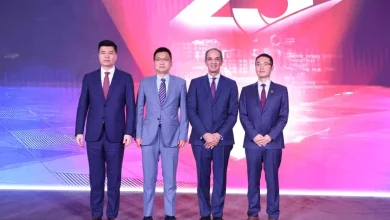
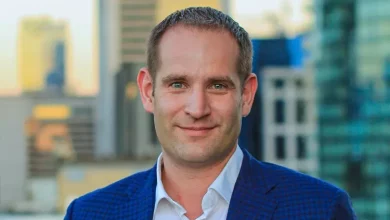
This year, Fortinet’s presence will be further strengthened by the participation of Derek Manky, Chief Security Strategist & Global VP of Threat Intelligence, who will join the event to share global insights on the evolving threat landscape and the role of AI in modern cyber defense. Fortinet experts will also participate in panel discussions, sharing insights on emerging threats, AI in cyber defense, and strategies for securing hybrid environments.
What is your advice to companies and organizations regarding the safe use of artificial intelligence technologies?
Malicious actors increasingly exploit AI to accelerate their tactics and organizations need to be able to defend themselves effectively from external and internal threats. AI in cybersecurity vastly improves threat detection, automates responses, and strengthens vulnerability management. It empowers cybersecurity systems to analyze huge amounts of data, identify patterns, and make informed decisions, at speeds and scales beyond human capabilities. It can automate routine tasks such as log analysis and vulnerability scanning, freeing up human analysts to focus on more complex and strategic activities.
At the same time, to minimize insider threats and human error whilst getting the best out of AI-powered end-user solutions, organizations should focus on user-friendliness, diverse device management, comprehensive training and support and the prioritization of data privacy and compliance when integrating AI into workflows.
What are Fortinet’s current priorities in the Egyptian market? Are there any plans for expansion or new investments in the region?
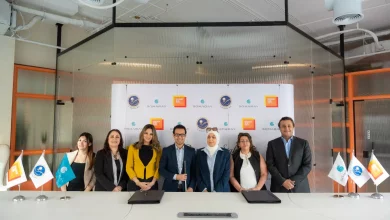
Fortinet has a continuously growing customer base in Egypt and the region, helped by a strong network of partners and distributors who we have recently celebrated at our regional Partner Awards. We are deeply integrated with private and public sector organizations in the country and continue to focus on education and training to address the cybersecurity skills shortage in the region, for example with the Arab Academy for Science, Technology & Maritime Transport (AASTMT).
In your opinion, which sectors are most targeted by ransomware attacks, and how can they protect themselves?
Education, government, and healthcare are among the leading sectors experiencing ransomware attacks in recent years, but no organization, large or small, can call itself safe. Ransomware attacks have become the most dangerous form of cyberattacks in recent times, as hackers demand hefty sums to return the sensitive data of an organization. Failing to pay the amount can lead the company to lose its valuable data, customers, and, ultimately, revenue and growth in the long term. Criminal gangs are now subcontracting much of their attacks. Some offer ransomware-as-a-service (RaaS), which allows cybercriminals to deliver more ransomware attacks.
Ransomware threats are intensifying, targeting all types of organizations and critical infrastructure with advanced tactics like double extortion and supply-chain compromises. Escalating attack frequency underscores the urgency for robust cybersecurity, user education, and proactive defense. Collaboration among governments, businesses, and cybersecurity experts is pivotal to curb this growing menace.
Fortinet’s Security Fabric uses layered security and automation to prevent, detect, and respond to attacks. Specifically, Fortinet ransomware protection solutions integrate artificial intelligence and other advanced analytics across the digital attack surface and the cyber kill chain. Thus, organizations are provided multiple opportunities to prevent and/or detect ransomware campaigns and components.
IDC reports indicate that cybersecurity spending in the Middle East and Africa will grow by 15% annually until 2027. How does Fortinet view its opportunities in this region, especially with governments expanding digital transformation and smart city projects?
Digital transformation has been a major trend in Middle Eastern and African organizations and in particular the adoption of cloud for some workloads. 59% of financial institutions, for example, had moved at least some processes to the cloud by late 2023. This, alongside rapid developments in the field of AI, have expanded attack surfaces, leading to a significant increase in cyber threats in the region. Ransomware and advanced persistent threats (APTs) are among the most common types of attacks. In addition, sophisticated social engineering techniques, such as phishing emails, fake messages and deepfake videos created using artificial intelligence are rapidly becoming more widespread.
Fortinet’s comprehensive security solutions, including FortiCloud and FortiAI, allow organizations across MEA to embrace new technologies and transform their operations whilst being protected from existing and emerging threats and ensure compliance with local legislation. In relation to critical infrastructure, the Fortinet OT Security Platform – as an extension of the Fortinet Security Fabric – combines deep OT visibility with automated enforcement, advanced threat protection, secure remote access, ruggedised infrastructure, and security operations capabilities. This enables consistent security and faster response to threats across operational networks for organizations and institutions across MEA.
Fortinet is a global leader in integrated cybersecurity solutions (Security Fabric). How does this platform help organizations defend against today’s complex threats?
As organizations undergo digital acceleration, their attack surface expands and network complexity increases. At the same time, cyber threats are becoming increasingly automated and sophisticated. For over a decade, Fortinet has spearheaded the doctrine that a broad, integrated, and automated security platform is essential for reducing complexity and increasing overall security effectiveness. To achieve this, Fortinet has integrated its cyber security mesh architecture (CSMA) strategy across its broad solutions portfolio. Fortinet’s Security Fabric allows organizations to gain deep visibility across all their network edges, centrally manage and deploy solutions with consistent policies and configurations, and make use of intelligence collected from their security fabric. In addition, anonymized threat data from global Fortinet Security Fabric customers and third-party integrations enables real-time protection for known and never-seen-before attacks and automate actionable responses.
How is Fortinet using generative AI technologies for early threat detection? Do you have an estimate of how much AI has reduced threat detection time over the past year?
Generative AI acts as a powerful ally in the ongoing battle against cyber threats. By creating realistic simulations, predicting attack scenarios, and enhancing threat detection, it empowers cybersecurity professionals to proactively defend their organizations and stay ahead of the ever-evolving threats. FortiAI, Fortinet’s AI-powered security assistant, uses GenAI to guide, simplify, and automate security analyst activities. FortiAI-Assist is embedded throughout the Fortinet Security Fabric platform, combining intelligent analytics and automation for security and network operations. It accelerates detection, reduces overhead, and improves operational efficiency at AI speed. Through continuous analysis, baselining, and trend insights, it uncovers threats, correlates activity, and optimizes network performance—helping NOC and SOC teams stay resilient, proactive, and effective across the enterprise.
With ransomware attacks increasing by 80% globally in 2024, what new strategies is Fortinet implementing to reduce losses, particularly in critical sectors like healthcare, energy, and banking?
Ransomware threats are intensifying, targeting all types of organizations and critical infrastructure with advanced tactics like double extortion and supply-chain compromises. Escalating attack frequency underscores the urgency for robust cybersecurity, user education, and proactive defense. Unfortunately, cybercrime knows no borders and has grown into big business. Effectively disrupting cybercrime requires public and private organizations to work together, taking a coordinated and unified approach. Collaboration among governments, businesses, and cybersecurity experts is pivotal to curb this growing menace.
Fortinet is an active member of a number of important transnational public-private cybersecurity initiatives. In addition to Fortinet’s involvement with the World Economic Forum PAC and Cybercrime Atlas initiative (which just released its 2025 report), Fortinet has been a trusted partner to INTERPOL and an active Global Cybercrime Expert Group member for nearly 10 years. The company also joined INTERPOL’s Gateway initiative in 2018, which offers a framework for sharing threat intelligence across organizations. Fortinet is also a long-standing member of the NATO Industry Cyber Partnership, a partner of NIST’s National Cybersecurity Excellence Partnership program, a founding member of the Cyber Threat Alliance, an official research partner with MITRE Engenuity’s Center for Threat-Informed Defense, and more.
As the global cybercrime landscape evolves, these collaborations will only become more critical to halting threat actors.
Reports suggest that cybercrime costs in the Middle East exceeded $2.3 billion in 2024. What is the scale of Fortinet’s investments in Egypt and the region? Are there plans to expand your operational or training centers here?
Fortinet has a continuously growing customer base in Egypt and the region, helped by a strong network of partners and distributors who we have recently celebrated at our regional Partner Awards. We are deeply integrated with private and public sector organizations in the country and continue to focus on education and training to address the cybersecurity skills shortage in Egypt, for example with the Arab Academy for Science, Technology & Maritime Transport (AASTMT).
With the number of Arab internet users exceeding 220 million, how can Fortinet raise cybersecurity awareness among individuals and small businesses, which are often the most vulnerable?
As part of the Fortinet Training Institute, the Education Outreach Program works with global leaders to drive change on pressing cybersecurity issues. Our partnerships extend to industry, academia, government, and nonprofits to ensure we are reaching all populations. By providing opportunities for training, certification, and connecting individuals with the Fortinet employer ecosystem, we’re working to help close the cybersecurity skills gap.
Addressing the cyber skills gap is vital to enhancing our society’s collective cyber resiliency and we are committed to developing the current and future cyber workforce through the Fortinet Training Institute. As part of this effort, we remain focused on our pledge to train 1 million individuals in cyber by 2026.
How does Fortinet view the future of cloud security amid the rapid expansion of digital services and the shift to cloud computing?
As cloud adoption accelerates across all industries, the attack surface increases and securing the network becomes more complex and requires a platform approach. At the same time, with the global political and economic landscape rapidly evolving, organizations face a growing array of compliance complexities. Local data protection regulations create strict requirements around data governance that organizations must navigate.
Fortinet addresses these challenges with its Sovereign SASE solution, which allows organizations to securely connect and protect users, applications, and data, regardless of location. It guarantees that data resides and is processed within specific geographical boundaries, providing complete control over sensitive data complying with regional data regulations.
What are the most important partnerships or technology alliances Fortinet has recently formed with major entities like Microsoft, Google Cloud, or Amazon Web Services to enhance its security solutions?
Fortinet provides integrated security at any stage of an organization’s Google Cloud adoption powered by AI-driven threat intelligence from FortiGuard Labs and 25 years of cybersecurity experience. Fortinet simplifies security management, ensures full visibility, and provides broad protection across your Google Cloud environments.
With the growing use of IoT and smart cities, how is Fortinet keeping pace with securing non-traditional devices such as smart cars and industrial control systems?
Fortinet has been building an industry-leading OT Security Platform for 20-plus years and remains at the forefront of OT security innovation. As cyberthreats against critical infrastructure and across industries such as energy, transportation, and manufacturing continue to grow, Fortinet remains committed to delivering comprehensive security solutions tailored for operational technology environments.
The Mobile Secure Connectivity Kit, for example, is a ruggedized field-ready solution designed to provide secure and reliable connectivity across multiple critical sectors. Built to operate in challenging environments, the kit enables fast and protected VPN communication from remote or hard-to-reach locations, ensuring uninterrupted access to critical systems and data. From emergency field operations and disaster recovery to maintenance and repair activities, cyber forensics in the field, and even secure hubs for VIP or special events, the Mobile Secure Connectivity Kit empowers industries such as oil and gas, power, water and wastewater, and transportation to maintain operational continuity and resilience under any conditions.
What is your vision for the future of cybersecurity over the next five years? Do you believe generative AI will be the greatest threat or the most powerful tool for protection?
AI is already constituting a big problem as it lowers the barriers of entry for cybercriminals that today operate like multinational organizations. Already, organizations are becoming overwhelmed with the volume and sophistication of attacks whilst struggling with a severe cybersecurity skills shortage. Taking a centralized platform approach with integrated threat intelligence powered by AI is important today.
On the other hand, with the rapid advancements in quantum computing, a significant challenge to cybersecurity has emerged. Quantum computers are expected to break many encryption methods currently used to secure sensitive data, making developing alternatives to withstand these threats essential. If quantum computers were to compromise current cryptographic methods, it could lead to a complete breakdown of the existing security framework, which is why Post-Quantum Cryptography (PQC) has become a potential alternative. Post-quantum cryptography (PQC) is not just a theoretical concept, but a practical solution that is urgently needed to protect digital systems against the potential threats of quantum computers. The shift to post-quantum cryptography (PQC) is necessary for enterprises, however, it requires planning and coordinated execution. Although there is uncertainty surrounding quantum computing timelines, and large-scale quantum attacks aren’t necessarily imminent, organizations must act now to avoid future vulnerabilities and attacks. A hybrid model combining classical encryption with PQC is currently the best approach for a secure transition. Industries that store sensitive data for a long period of time and critical infrastructure organisations must prioritise the adoption of PQC to protect against future quantum computing threats.
Finally, what message would you like to send to companies and governments regarding the importance of investing in cybersecurity, especially with the full shift toward digital services and artificial intelligence?
Cybercriminals are accelerating their efforts, using AI and automation to operate at unprecedented speed and scale. The traditional security playbook is no longer enough. Organizations of all shapes and sizes, public or private, must shift to a proactive, intelligence-led defense strategy powered by AI, zero trust, and continuous threat exposure management across IT and OT networks to stay ahead of today’s rapidly evolving threat landscape.