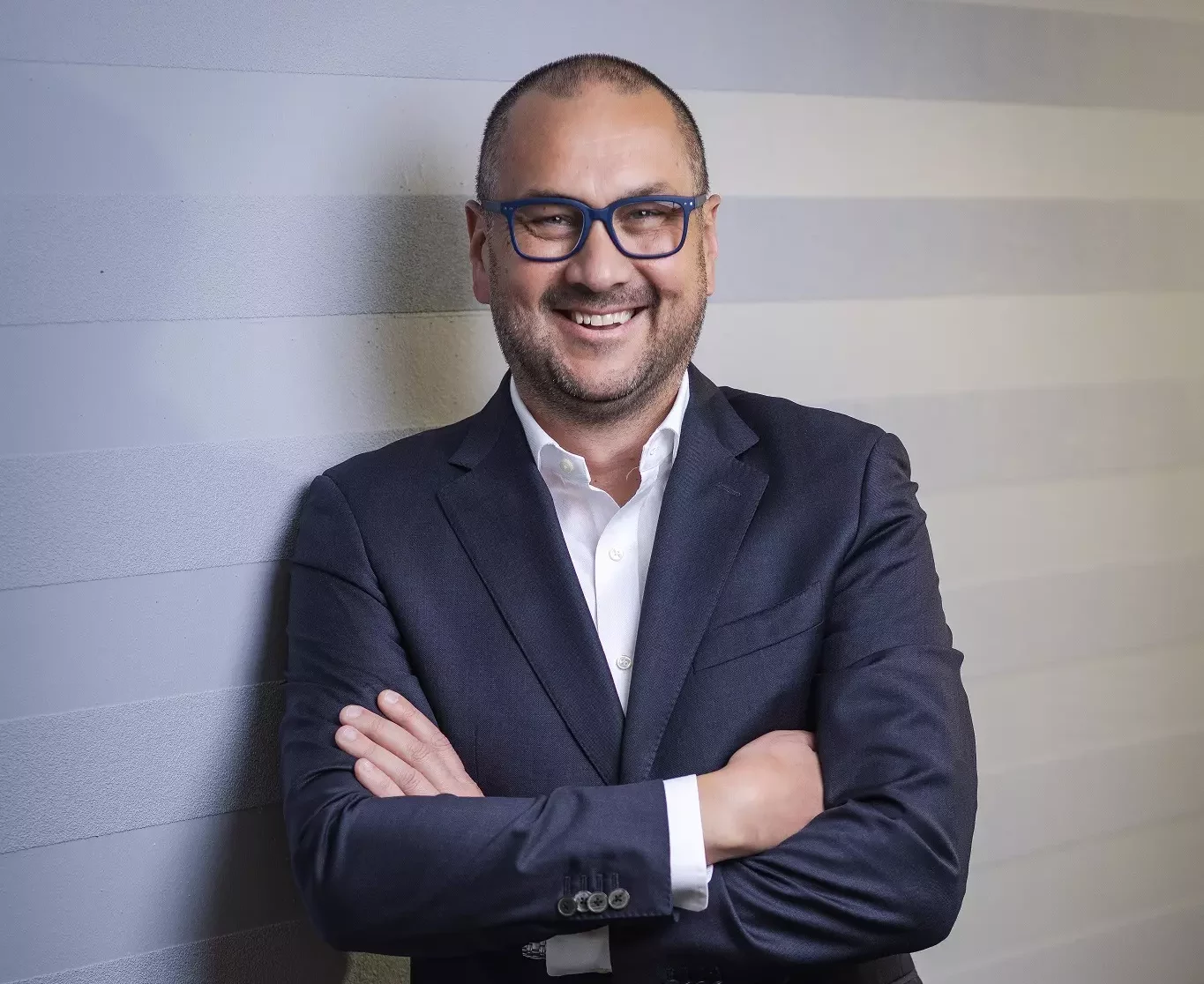
Wojtek Piorko: Egypt Emerges as a Regional Hub for Data Centres and Digital Infrastructure
في يوم 10 فبراير، 2026 | بتوقيت 5:43 م
كتب: Mohamed Lotfy



visit to Egypt, stressing that Egypt stands out as one of the most pivotal markets in Africa and the Middle East. He highlighted that the Egyptian market represents a core pillar of Vertiv’s regional expansion strategy, driven by the strong growth of the ICT sector and Egypt’s strategic geographic position as a key gateway connecting continents through submarine cable networks.
Piorko elaborated on Vertiv’s vision for the Egyptian market and the company’s role in supporting digital transformation initiatives and data centre projects through integrated solutions for power management, cooling, and critical digital infrastructure. He also underscored Vertiv’s reliance on a broad network of local partners, alongside its regional leadership presence based in Cairo.
Furthermore, Piorko outlined the key sectors driving demand in Egypt, led by telecommunications, banking and financial services, energy, oil and gas, and manufacturing. He emphasised that the rapid expansion of artificial intelligence and cloud computing applications is significantly increasing the need for advanced and sustainable infrastructure. At the same time, he reaffirmed Vertiv’s commitment to developing highly energy-efficient solutions and supporting the integration of renewable energy sources, helping to reduce the carbon footprint of data centres and strengthen Egypt’s position as a promising regional hub for data centres and advanced technologies.
- To start with, could you tell us in detail about Vertiv — the company and its activities?
Vertiv is a global leader in critical digital infrastructure solutions, providing the hardware, software and services that keep vital IT systems running continuously. The company’s portfolio spans power management, thermal management, IT systems, infrastructure solutions and services to support digital transformation and AI deployments. In essence, Vertiv solutions enable data centres, communication networks and industrial facilities to operate reliably and efficiently.
Vertiv is headquartered in Ohio, USA, and operates in more than 130 countries. Within Africa, Vertiv has a presence in five locations, namely Egypt, Kenya, Morocco, Nigeria and South Africa, serving all 54 countries on the continent. Our African headquarters are based in Johannesburg, South Africa.
Vertiv has Customer Experience Centres – facilities where customers can interact with and experience Vertiv’s critical digital infrastructure technologies firsthand – at its offices in Johannesburg, as well as in Nairobi, Kenya. It also has a Customer Showroom in Lagos, Nigeria. In addition, the organisation has a growing number of skilled local partners and authorised service providers.
- What is the company’s global vision regarding the Egyptian market?
As one of Africa’s largest economies, the Egyptian market is strategically important and a high-growth digital hub within the region.
Mordor Intelligence predicts that the Egyptian ICT market will reach USD 53.11 billion by 2030, reflecting a 17.61% CAGR over the forecast period. The rapid expansion stems from the government’s Digital Egypt programme, large-scale data centre commitments from Gulf sovereign funds and Egypt’s status as the primary landing point for 15 active undersea cables.
Telecommunications services currently hold 35.24% revenue share, while IT services lead growth at a 17.15% CAGR as enterprises accelerate cloud and Artificial Intelligence (AI) adoption. Large enterprises account for 61.15% of spending, but small and medium-sized enterprise (SME) demand is catching up thanks to subsidised financing and advisory schemes from the European Bank for Reconstruction and Development. Public sector digitalisation keeps government and public administration the top vertical at 24.81% share, yet Banking, Financial Services and Insurance (BFSI) is the fastest-growing vertical at 22.19% CAGR as fintech volumes scale.
Vertiv supports Egypt’s digital transformation by providing the latest critical infrastructure solutions needed for emerging technologies like AI, cloud and edge computing.
To reinforce this long-term vision, Vertiv has regional leadership based in Cairo, ensuring close proximity to Egyptian customers. The company has also invested in a robust ecosystem of local, highly skilled partners and Authorised Service Providers, supporting complex industrial, energy, ICT and data centre deployments across the country.
This established partner network ensures broad market coverage, accelerated deployment timelines, and high-quality local service delivery, enabling Vertiv to effectively support customers across Egypt.
By investing in knowledge-sharing events, partnerships and tailored solutions, Vertiv aims to be a long-term partner in Egypt’s journey to become a regional technology and data centre powerhouse.
- What does the Egyptian market represent for Vertiv, especially since the company is involved in projects across sectors such as oil & gas, banking, and telecommunications?
The Egyptian market represents an important part of the broader opportunities in Africa – it has a diverse economy with several critical industries undergoing digital transformation. Vertiv operations in Egypt span multiple key sectors, including telecommunications, banking and finance, oil & gas and energy, manufacturing and more.
Each of these industries requires access to reliable, efficient critical infrastructure solutions for digitalisation and harnessing AI.
- What are the key sectors the company plans to target in the future?
Vertiv will continue to focus on its core markets like data centres and telecommunication networks while also targeting fast-growing and emerging sectors that require advanced critical digital infrastructure. These include banking and finance, oil & gas and energy utilities, manufacturing and Industry 4.0, healthcare and education. These are all sectors where digital transformation and AI are growing, and this is where Vertiv plays a key role.
- How do you assess the readiness of emerging markets like Egypt and the Middle East to adopt these advanced solutions, both financially and technically?
Emerging markets in the Middle East and North Africa are rapidly improving their readiness for advanced digital solutions like AI and large-scale data centres, though they face both opportunities and challenges.
In several North African countries, we’re see increased funding for digital projects, with public-private partnerships (PPP) also on the rise. Egypt, for instance, offers incentives via tech zones and PPPs to finance digital infrastructure.
Technically, the region is making strides, with Egypt now coming to the forefront as an emerging data centre hub. The country benefits from a strong geographic position and connectivity – as of mid-2025, it’s connected by 15 submarine internet cables (with more under construction), giving it robust, low-latency links to Europe and Asia. This connectivity and government focus (the Digital Egypt initiative) provide a solid technical foundation for advanced solutions.
However, technical challenges do remain, such as reliable power supply, developing sufficient local expertise to deploy and maintain complex systems, and upgrading network infrastructure within countries.
In general, the trajectory is positive: with continued investment and knowledge transfer, countries like Egypt are quickly closing any gaps and adopting cutting-edge solutions nearly on par with more developed markets.
- To what extent does your regional strategy rely on partnerships with governments, universities, or startups?
Partnerships are a cornerstone of Vertiv’s regional strategy in Northeast Africa and the Middle East. Vertiv recognises that accelerating digital innovation requires an ecosystem approach, so it actively collaborates with various stakeholders.
It’s worth noting Vertiv’s close relationships with local channel partners as part of its strategy.
- AI undoubtedly requires a strong data centre infrastructure. How does Vertiv contribute to meeting these requirements and supporting Egypt’s transformation into a regional hub for data centres in the region?
Vertiv plays an important role in enabling AI-ready, robust data centre infrastructure in Egypt and the surrounding region. Its contributions include supplying and supporting the cutting-edge physical infrastructure without which AI cannot run at scale; capacity-building, through training local teams and advising on projects; as well as working with Egyptian stakeholders to optimise layouts, electrical designs and cooling configurations for AI.
Vertiv’s involvement in events, industry panels and forums, like CairoICT and its local AI Roadshow held last year, aid in spreading knowledge on AI infrastructure requirements, helping Egyptian enterprises prepare their data centres for AI’s demands.
- What is the difference between the requirements of traditional data centres and those designed to host AI applications?
Data centres built for AI applications have significantly different requirements compared to traditional enterprise data centres. The main differences include much higher total power density, as well as a greater need for cooling, with a shift toward liquid cooling (such as direct-to-chip water cooling or immersion cooling) in AI data centres.
- What solutions do you offer to address the high energy consumption caused by operating AI systems, given that electricity consumption is one of the biggest challenges?
We address AI-driven power demands through two primary technical approaches: advanced cooling optimisation and power delivery efficiency. Our latest innovations include high-efficiency liquid cooling and hybrid cooling systems, such as the Vertiv™ CoolLoop Trim Cooler, which significantly reduces energy consumption compared to traditional cooling methods. On the power infrastructure side, our high-efficiency UPS systems and Battery Energy Storage Systems (BESS), such as the Vertiv™ EnergyCore Grid, enable intelligent power management and peak shaving capabilities while maintaining critical system reliability. Additionally, our intelligent monitoring and management platforms provide real-time visibility into power and cooling performance metrics, enabling data-driven optimisation and rapid identification of efficiency opportunities.”
- How can we balance performance efficiency with reducing the carbon footprint of data centres to protect the environment?
Balancing high performance with a low carbon footprint is a top priority for modern data centres, and Vertiv drives this through continuous engineering and innovation. A key focus is maximising energy efficiency, as the most direct path to reducing data centre carbon emissions. Vertiv’s comprehensive product portfolio delivers industry-leading efficiency while maintaining mission-critical performance standards.
Another fundamental way to cut carbon footprint is to use clean energy. Vertiv assists data centres in integrating renewable energy sources and alternative power. For example, Vertiv’s DC power and micro-grid offerings allow a facility to leverage solar panels or wind turbines when available.
Vertiv has also engineered cooling systems specifically designed for low-GWP (global warming potential) refrigerants, anticipating future environmental regulations and helping customers reach their sustainability targets.